


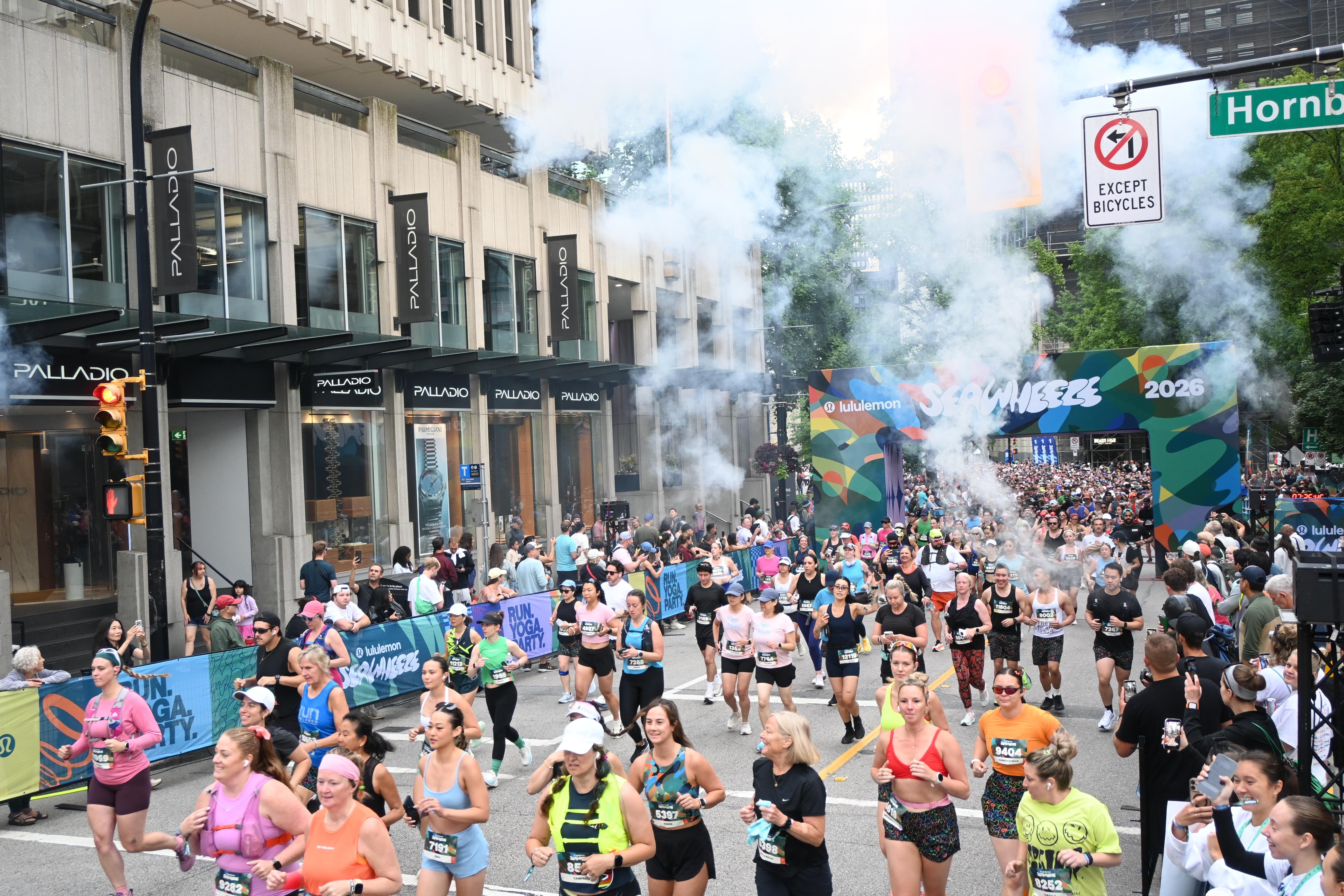
I looked down as my feet crossed the checkered start line, waiting to feel different. Cheers, music, and the emcee’s voice roared around me as I tried to remember how to keep my heart rate in check. I was wearing new shoes, an absolute no-no for races, so I wiggled my toes quickly to check for hotspots. Felt fine. It was a gorgeous, sunny day, and at 7 a.m. the air was perfectly crisp.
The night before, my friends threw me a carby potluck to prepare me for the race. Each couple brought something different, so we had the perfect mishmash of garlic mashed potatoes, roast beef, bolognese, fried chicken, and dumplings. I thought back to telling them at the beginning of the year that I’d never run a marathon.
“I just want to run for fun,” I confidently retorted. “It’d be nice to do it for my health and see how fit I can get.”
The truth is, I started running because I needed somewhere to put what I was carrying. Proving to myself that I could do a hard thing was what made running stick. Month after month, I challenged myself to run one day a week, then two, then three. Then one day, my Apple Pay pinged! as I subscribed to Runna, committing to a 12-week training program.
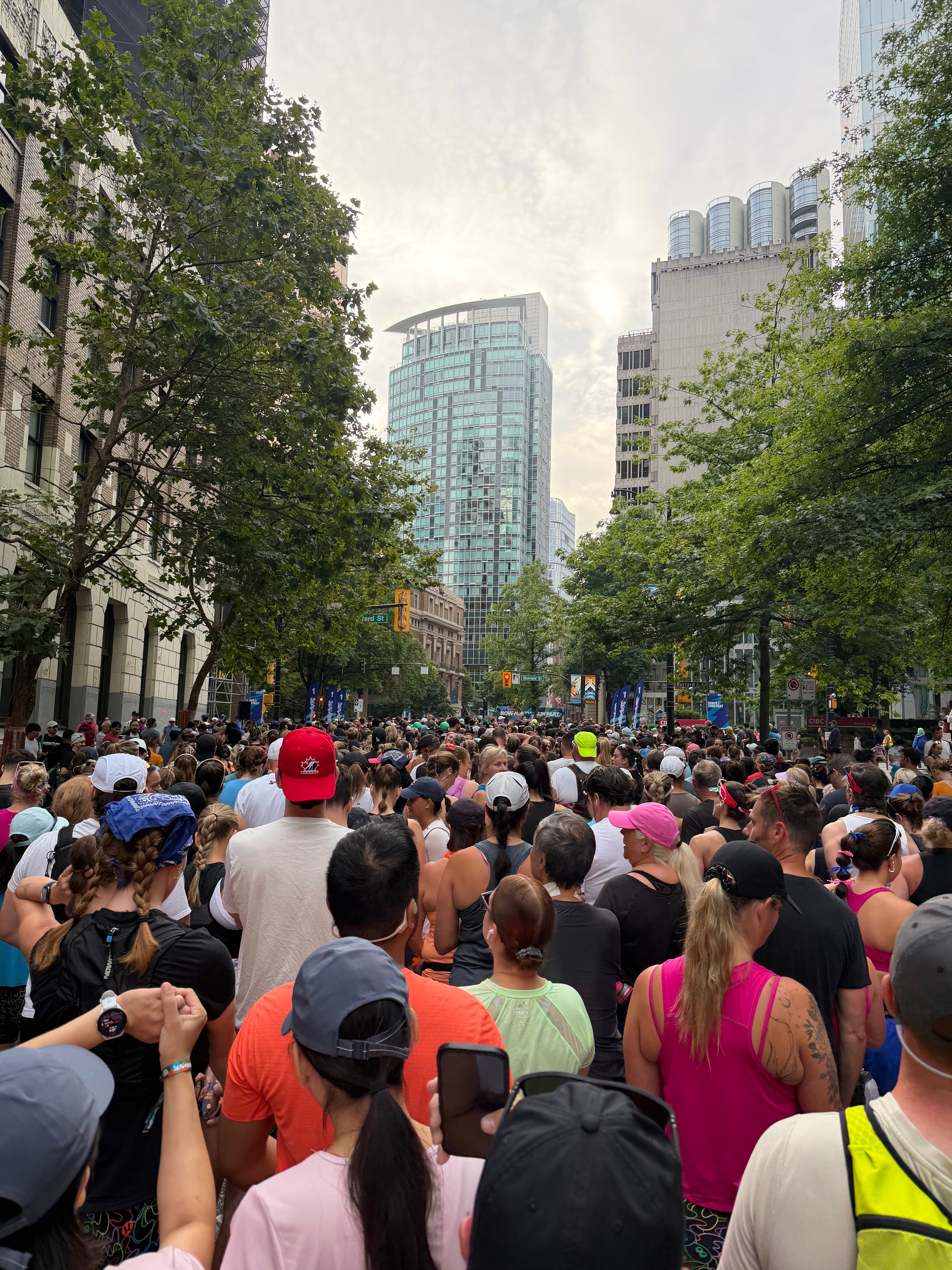
The distance between the start line and km 21 felt vast. I tried not to think about just how vast as I checked my watch to see if I was on pace. I started slower than I thought I would, getting trapped behind walls of people also settling into their groove. But noticing that my heart was beating steadily and my breath remained in my nose, I was relieved to feel strong and in control.
Every few kilometres, there’d be a cheer station. Signs, horns, music. Lululemon and other local businesses pulled out all the stops for this citywide event.
“HELL YEAH!” I shouted as I ran by the sign that read, “Who said women shouldn’t finish first?”
There were moments when I felt hyper-connected—as if an invisible string connected every runner in the race and the steps of one carried the steps of all. Then there were moments I felt completely alone. Faces blurred around me as we turned onto Cornwall Street. I tried to stay with my breath, but the memories there were louder than the race. For a few blocks, that acted as a distraction to the physical impact of running.
If there’s one thing I’ve learned from running distances spanning between 1 km and 31 km, it’s that no matter how far I run, it’s the last quarter that feels the hardest.
After marker 17, the repetition of putting one foot ahead of another started to feel like pressure in my joints. Cheer stations became overstimulating rather than energizing. My big toe thumped against the front edge of my shoe. “Just make it to the next marker,” I thought.
More and more supporters gathered as the finish line got closer. Partners, parents, and friends screamed for not just their runner but all runners. I pushed away the itch in my nose that hinted at tears. My right ankle, which I had injured back in March, started to ache with the impact, and I tried my best to ignore it. My Garmin told me I was slightly off pace, but at that point, I couldn’t do anything about it. As I bargained with myself, my body kept moving. Until I decided what to do, my only goal was to stay moving.
At kilometre 19, I started wondering, Why do I even care about finishing? What if I just stop? What if I just quietly leave the race? Maybe the Instagram reel I’ve been planning for this race can be about how it’s okay to drop out of a race. I mentally started planning the script.
Maybe if he was here, I’d finish.
Maybe if my family were here, I’d finish.
Maybe if I knew that all my friends were gathered at the finish line, I’d finish.
My mind reached for one more person, then stopped.
I knew that none of those things were true, so my legs slowed.
But slowing down took me back to my breath, and the brain fog gave an inch. Next thing I knew, the finish line was in sight, and I miraculously sped up.
When I think back to crossing the finish line, I remember it as a quiet moment. I reached down and stopped my Garmin on autopilot. Joy and relief flooded my system as I finally slowed to a walk. Looking around, I tried to focus on what I should be doing next. Volunteers along the sidelines were handing out medals, so I made my way over to receive one. I beamed as I told them, “Thank you.” My joints felt warm from prolonged use but surprisingly okay. It was as if the past 20 minutes of pain and suffering had slipped off when I crossed the finish line.
As I made my way through the crowd, I guessed at my finish time while taking stock of how I felt. I was sore but not that sore. Tired but not exhausted. It felt like I still had gas in the tank. Silently, I kicked myself, knowing that I could’ve pushed harder and started faster. I had hit the mediocre finish time I’d anxiously set the night before, but knowing I could’ve done better annoyed me. I had thought that after finishing this race, I would have no desire to do it again, but a surprising thought slipped into my mind.
I think I could run a full marathon.
My nose got itchy again, and I reminded myself that this was a moment I should be proud of. I worked hard for this. I thought about the one person who would’ve been proudest and let myself picture her beside me, beaming with a medal of her own. I rarely let myself imagine her still being here. Returning to reality always hurt. But in that moment, having her beside me felt right.
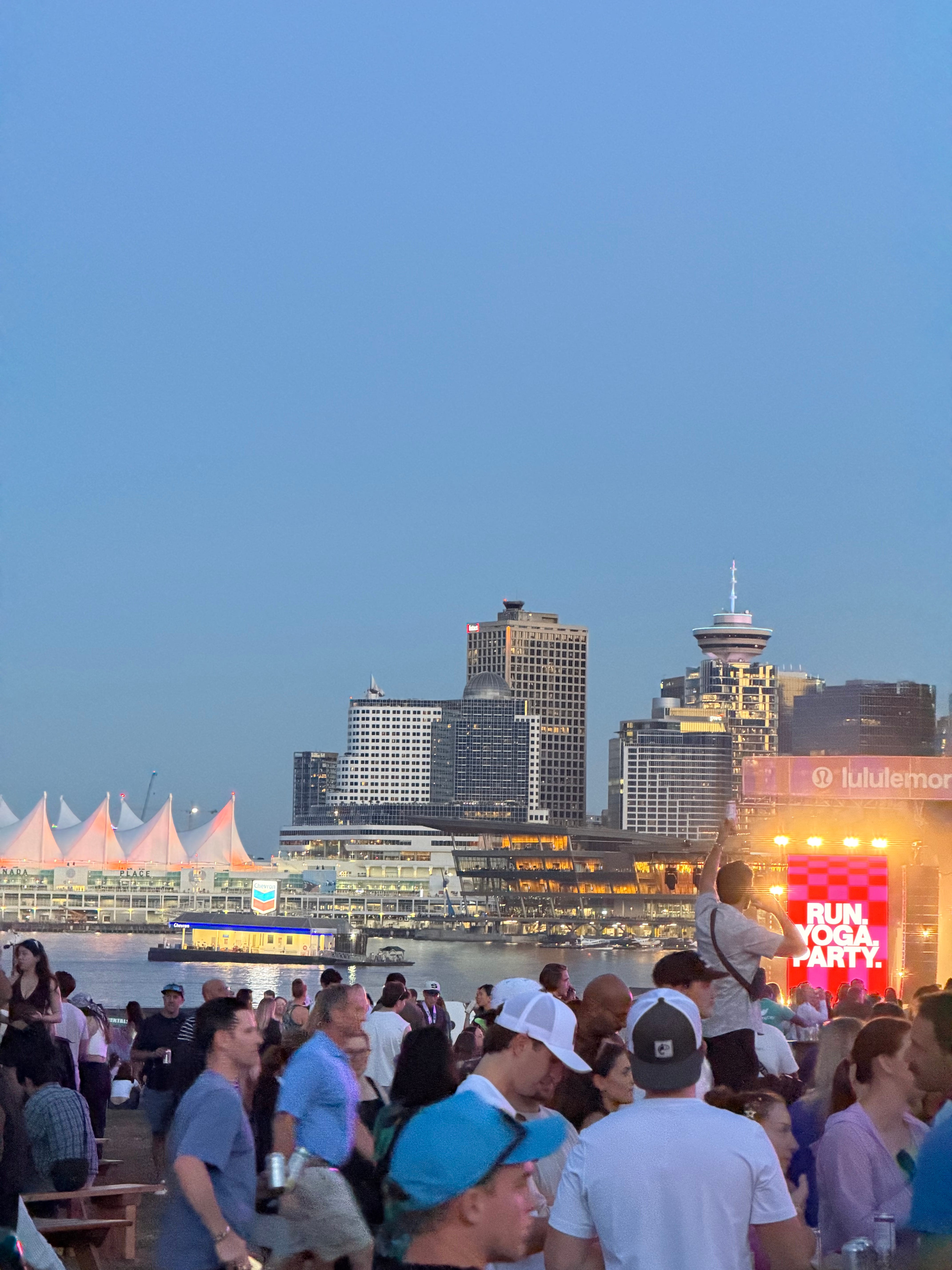
There was no other race that would’ve suited her more: the epic Vancouver views, the fact that it was hosted by Lululemon, and the chance to dance to John Summit afterward. She had moved back to Vancouver two springs earlier after spending most of her life abroad. She loved rediscovering all that the city had to offer. She would’ve loved this race.
The irony of running down Cornwall Street, where her accident had happened, hadn’t escaped me. I hadn’t made the connection when I looked over the course map the night before, so when we turned onto the street at km 9, my breathing got much harder. I had purposely avoided the street every time I visited Kitsilano because I could never unsee the wreckage from that night.
In many ways, I owed finishing the race to her. Facing grief for the first time was what got me running. Proving that I could do something hard was what made me continue. In that way, running felt like a gift from her. It gave me a way to work through what I was carrying while rebuilding my confidence to keep going. But doing it without her also felt wrong. I had missed so many opportunities to join her on her runs.
When I started the race, I wondered if it would make me feel different. When I finished, I still felt like myself: proud that I had started, always kicking myself for not doing better, and still missing her during all of life’s big milestones. Looking down at my medal, I imagined one around her neck. I couldn’t wait to carry her with me through the next race, too.
Thank you for reading this far! If you enjoyed this article, please consider becoming a paid or free subscriber. Your support costs the same as 2 cups of coffee per month, and really helps me continue to send you inspiration weekly!
If you want to see what I’m wearing + doing throughout the week, connect with me on YouTube, Instagram, and TikTok!
Angel xo
congrats on your half marathon!! Such a big and incredible accomplishment despite the time. How cool that your mind and body did that 🥳